
Bengaluru’s 75.6 KM Elevated Corridor Plan: Will Your Area See a Real Estate Surge?
Bengaluru’s 75.6 KM Elevated Corridor Plan: Will Your Area See a Real Estate Surge?
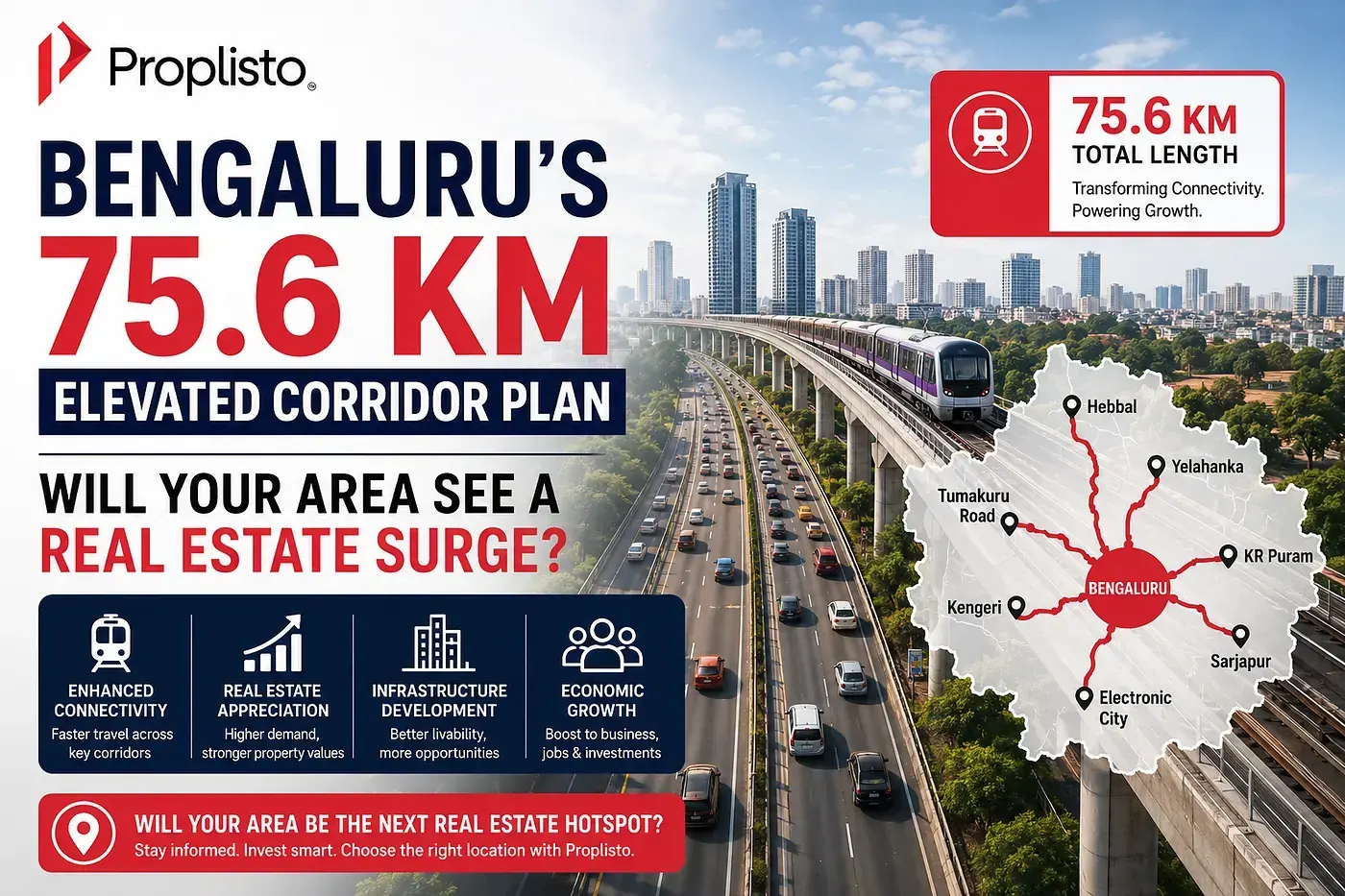
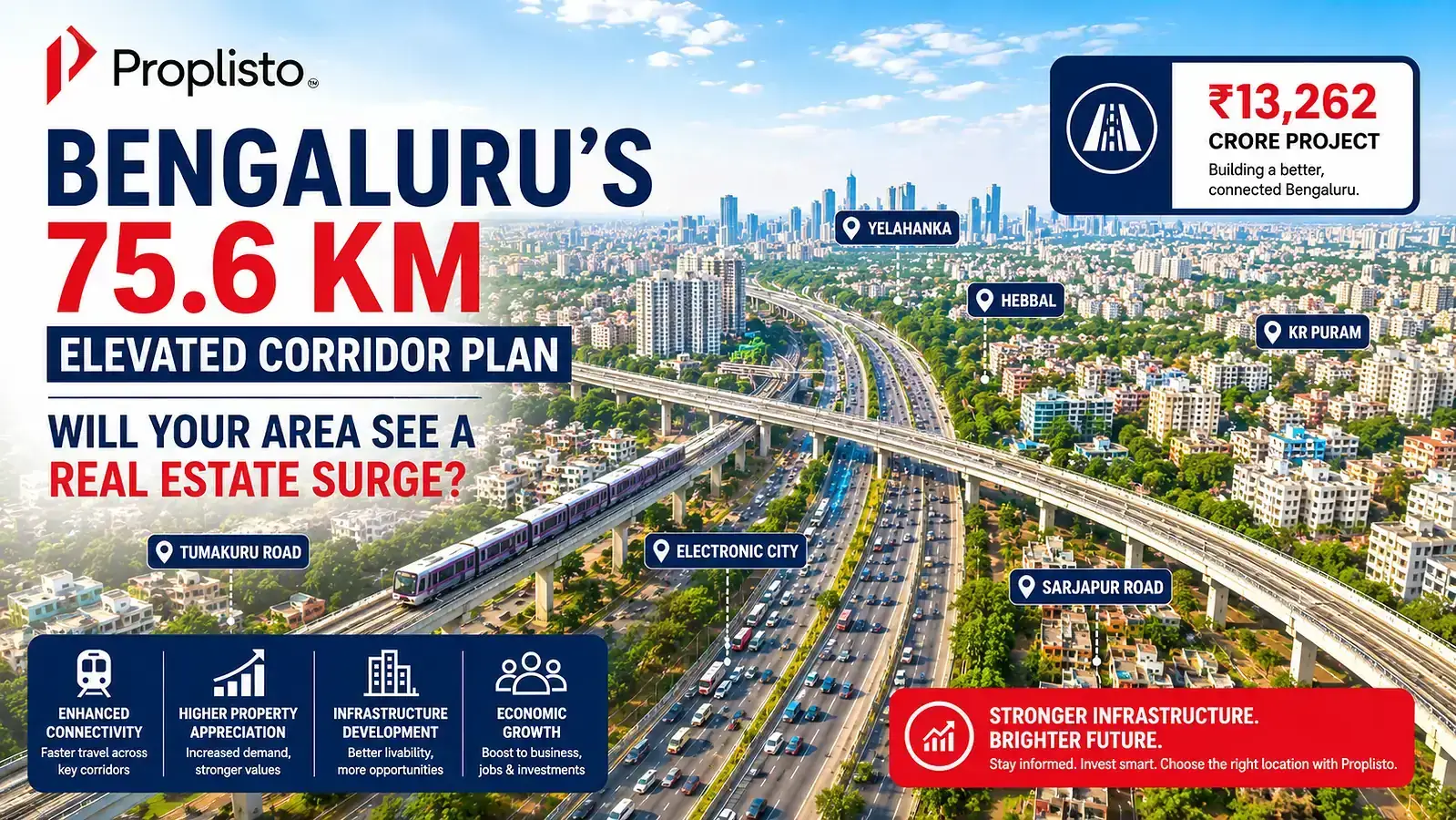
Bengaluru's infrastructure story is entering a new chapter. In a major move to tackle the city's growing traffic challenges, the Karnataka government has approved an ambitious elevated corridor network worth ₹13,262 crore. Spanning approximately 75.6 km across key parts of the city, the project aims to improve connectivity, reduce travel times, and support Bengaluru's long-term urban growth.
For homebuyers, investors, and property owners, infrastructure developments of this scale often create significant opportunities. Better roads and faster connectivity can transform neighbourhoods, increase housing demand, and boost property values over time.
So, which areas are expected to benefit the most from Bengaluru's newest mega infrastructure project?
Bengaluru's Biggest Elevated Road Expansion Yet
The approved project includes a network of elevated corridors, flyovers, and grade separators designed to ease traffic congestion at some of the city's busiest junctions.
With Bengaluru continuing to attract technology companies, startups, and a growing workforce, traffic has become one of the city's biggest challenges. The new corridor network aims to create smoother movement between residential suburbs, business districts, and industrial zones while reducing bottlenecks across major arterial roads.
The project covers multiple strategic routes across North, South, East, West, and Central Bengaluru, making it one of the most extensive road infrastructure initiatives undertaken in recent years.
Areas Expected to Benefit
North Bengaluru: The Biggest Winner?
North Bengaluru has already emerged as one of the city's most sought-after real estate destinations, thanks to Kempegowda International Airport, upcoming business parks, and large-scale residential developments.
Improved connectivity through the proposed elevated corridors could further strengthen demand in:
- Yelahanka
- Jakkur
- Kogilu
- Hebbal
- Thanisandra
- Airport Road Corridor
These locations are already attracting significant residential and commercial investments, and enhanced road infrastructure could accelerate future growth.
Kanakapura Road and South Bengaluru
Kanakapura Road has transformed into a major residential corridor over the past decade. The proposed improvements around Konanakunte and Raghuvanahalli are expected to reduce congestion and improve access to the city centre.
Key localities likely to benefit include:
- Konanakunte
- Raghuvanahalli
- Talaghattapura
- Vajarahalli
- Anjanapura
For homebuyers seeking larger homes and better affordability compared to central Bengaluru, this corridor could become even more attractive.
Mysuru Road Growth Corridor
The Sirsi Circle–Nayandahalli elevated corridor is expected to improve connectivity between central and western parts of the city.
Potential beneficiaries include:
- Nayandahalli
- Rajarajeshwari Nagar
- Kengeri
- Mysuru Road
- Bidadi
These areas have already witnessed rapid residential development and could see renewed buyer interest as connectivity improves.
Central Bengaluru
Several proposed corridors aim to reduce congestion in the city's busiest commercial districts.
Infrastructure improvements around:
- Minerva Circle
- Hudson Circle
- KR Circle
- Town Hall
could significantly improve accessibility to Bengaluru's Central Business District (CBD), benefiting both commercial and mixed-use developments.
What Does This Mean for Real Estate?
Infrastructure and real estate have always shared a close relationship. Whenever major connectivity projects are announced, surrounding localities often witness increased buyer attention.
Improved Property Demand
Better connectivity makes daily commuting easier, encouraging more people to consider emerging residential locations.
Potential Price Appreciation
Areas located near major infrastructure upgrades often experience stronger long-term property appreciation due to improved accessibility and growing demand.
Growth of New Residential Hubs
As travel times reduce, peripheral areas become more attractive to both end-users and developers, leading to the creation of new housing markets.
Commercial Development Opportunities
Improved transportation networks also encourage office spaces, retail centres, and mixed-use developments, creating additional economic activity.
Should Investors Pay Attention?
While infrastructure projects take time to deliver their full impact, they often serve as strong indicators of future growth.
Investors looking for long-term opportunities may closely monitor:
- Yelahanka
- Hebbal
- Thanisandra
- Kanakapura Road
- Rajarajeshwari Nagar
- Kengeri
- KR Puram
- Old Madras Road
These locations already have strong growth fundamentals and could receive an additional boost from improved road connectivity.
Challenges Ahead
Like any large infrastructure initiative, execution remains key.
Some challenges that may arise include:
- Land acquisition requirements
- Construction delays
- Environmental concerns
- Temporary traffic disruptions during development
The project's long-term success will depend on timely implementation and integration with Bengaluru's broader transport infrastructure, including Metro expansions and public transit systems.