
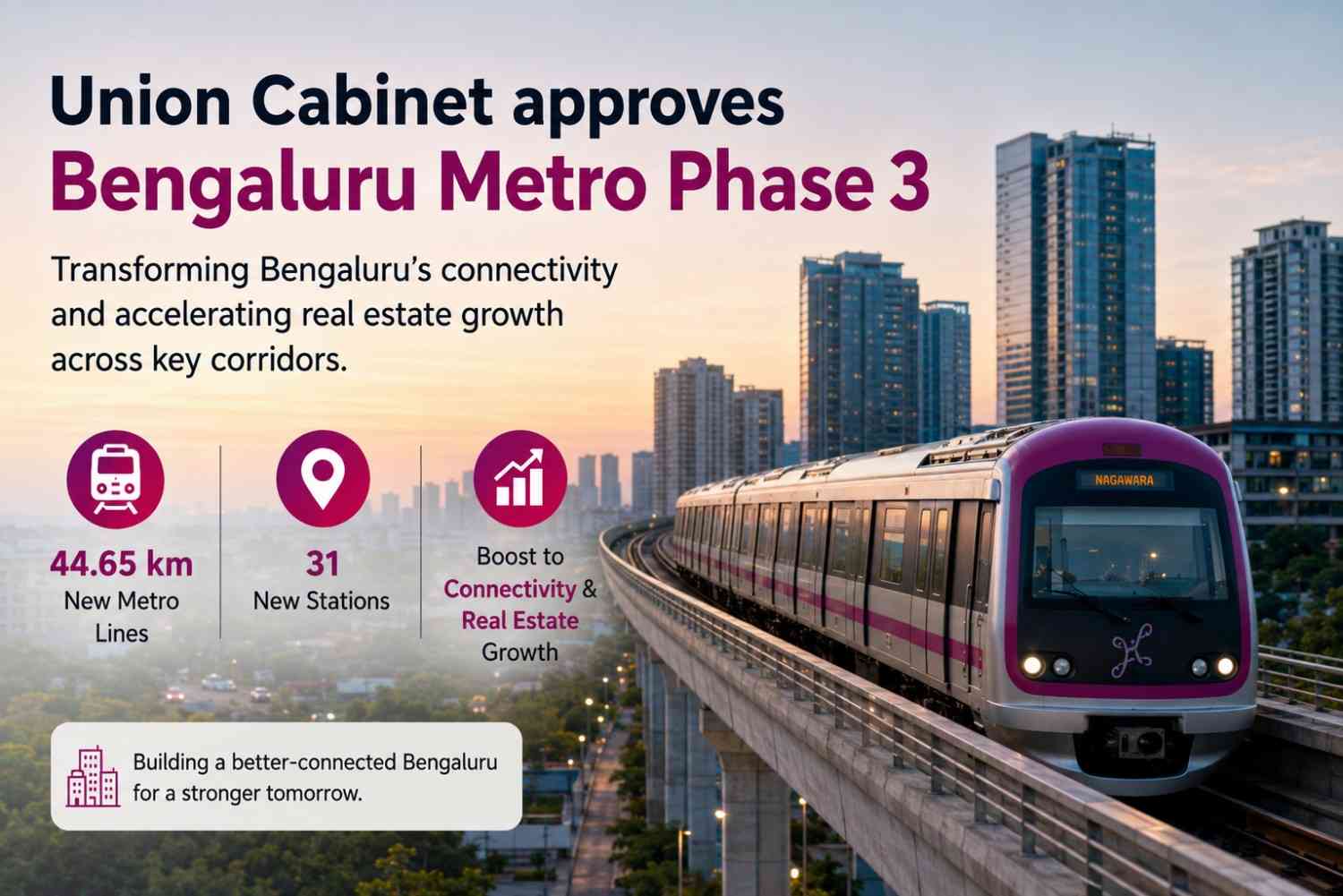
Bengaluru Metro Phase 3 Cleared: 44.65 Km Expansion Approved
Bengaluru Metro Phase 3 Receives Cabinet Approval
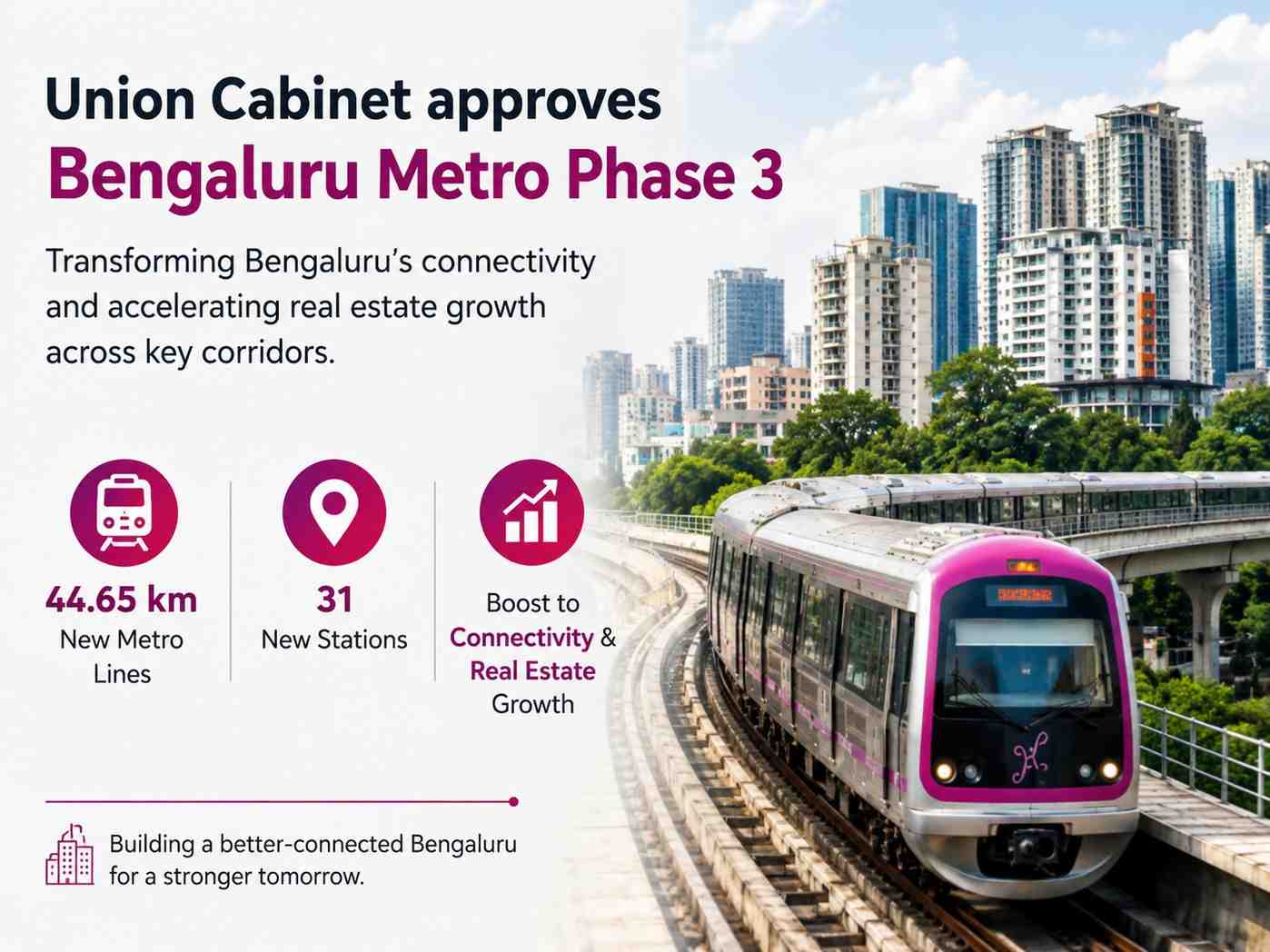
Bengaluru's public transportation network is set for another major upgrade as the Union Cabinet has approved Phase 3 of the Namma Metro project. The new phase will add 44.65 km of metro connectivity through two elevated corridors featuring 31 stations across the city.
The approval marks a significant milestone in Bengaluru's infrastructure journey, aimed at easing traffic congestion, improving urban mobility, and supporting future residential and commercial growth. As metro connectivity continues to influence property demand, the announcement is also expected to positively impact the city's real estate market.
Overview of the Approved Metro Corridors
Phase 3 consists of two strategic corridors that will strengthen connectivity in western and north-western Bengaluru.
Corridor 1: JP Nagar 4th Phase to Kempapura
- Total Length: 32.15 km
- Number of Stations: 22
- Elevated Corridor
This route will connect several important residential and employment zones, creating seamless transit options across the western stretch of the city.
Corridor 2: Hosahalli to Kadabagere
- Total Length: 12.50 km
- Number of Stations: 9
- Elevated Corridor
The corridor along Magadi Road is expected to improve accessibility for rapidly developing suburban regions and reduce dependence on road transport.
Investment and Project Details
The Phase 3 project has been approved at an estimated cost of approximately ₹15,600 crore.
Key project highlights include:
- Total network expansion of 44.65 km
- 31 new metro stations
- Fully elevated corridors
- Enhanced integration with existing metro routes
- Expected completion within the next few years
Once completed, Bengaluru's metro network will become one of the largest urban rail systems in India.
How Phase 3 Will Improve Bengaluru's Connectivity
Bengaluru has long struggled with traffic congestion due to rapid urbanization and increasing vehicle ownership. The metro expansion aims to address these challenges by providing reliable and efficient public transport.
Major benefits include:
- Reduced travel times across key corridors
- Better access to residential and commercial hubs
- Improved last-mile connectivity
- Reduced pressure on road infrastructure
- Enhanced commuter convenience
The project will particularly benefit residents living along Outer Ring Road West, Magadi Road, JP Nagar, and surrounding neighborhoods.
Impact on Bengaluru Real Estate
Metro infrastructure has consistently played a crucial role in shaping Bengaluru's real estate landscape. Areas with metro access typically experience stronger demand from both homebuyers and investors.
Rising Residential Demand
Improved connectivity often attracts:
- End-users seeking shorter commute times
- Working professionals
- Rental property investors
- First-time homebuyers
Projects located near metro stations generally witness higher demand and better occupancy rates.
Increased Property Appreciation
Historically, metro-connected locations have shown stronger capital appreciation compared to areas lacking public transport infrastructure.
The upcoming Phase 3 corridors could boost property values in:
- JP Nagar
- Magadi Road
- Kempapura
- Kadabagere
- Hosahalli
- Nearby developing micro-markets
Commercial Growth Opportunities
Improved connectivity encourages businesses to establish offices, retail outlets, and commercial developments near metro corridors.
Benefits for businesses include:
- Easier employee commuting
- Better customer accessibility
- Increased footfall
- Improved operational efficiency
This creates additional opportunities for mixed-use developments and commercial real estate investments.
Supporting Sustainable Urban Development
Apart from reducing traffic congestion, the metro expansion contributes to Bengaluru's sustainability goals.
Expected environmental benefits include:
- Lower carbon emissions
- Reduced fuel consumption
- Less dependence on private vehicles
- Improved air quality
- Promotion of public transportation
These factors make metro-led development an important component of Bengaluru's future urban planning strategy.
What Homebuyers and Investors Should Watch
The approval of Phase 3 is likely to trigger increased interest in locations situated near proposed stations. Investors and homebuyers looking for long-term growth may consider tracking emerging residential pockets along the approved routes.
Key factors to evaluate include:
- Distance from proposed stations
- Upcoming infrastructure developments
- Availability of social infrastructure
- Future employment opportunities
- Rental demand potential
Early investment in infrastructure-led growth corridors often provides significant long-term advantages.